
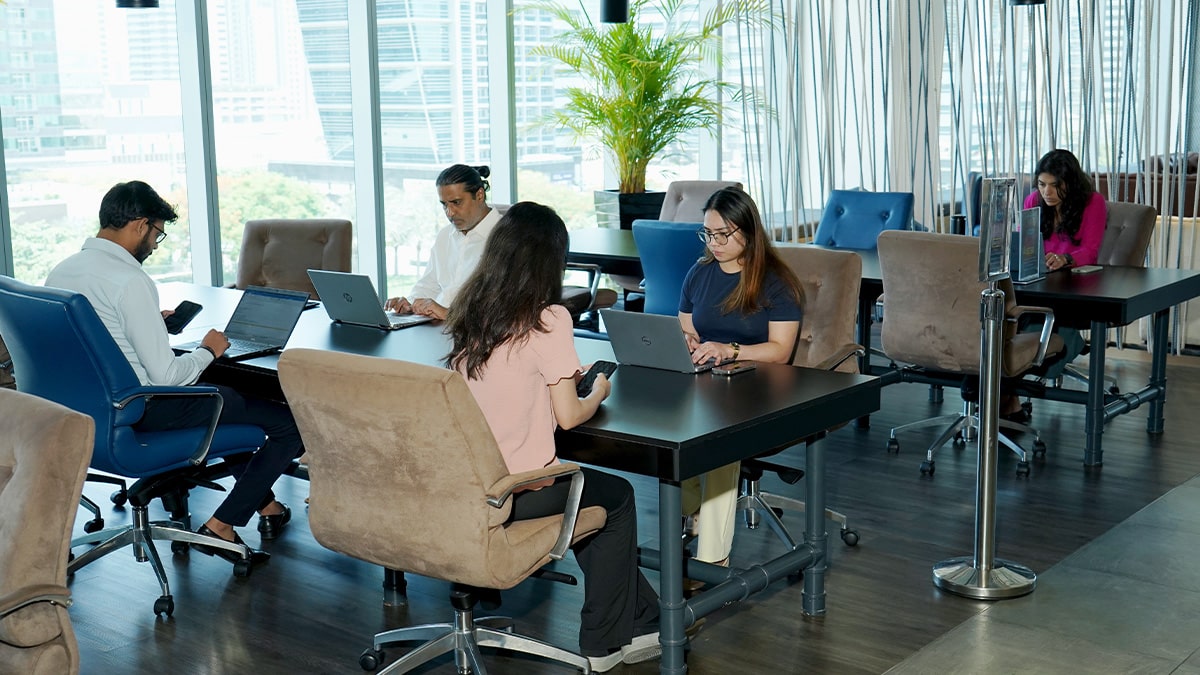
Quiet workspaces in Dubai exist, and more professionals are actively looking for them. In a city built around pace, energy, and constant movement, finding somewhere to actually concentrate has become a real challenge. The noise of open-plan offices, the interruptions of coworking floors, and the relentless hum of urban construction make focus a resource that doesn’t come free with a desk.
This guide breaks down what separates a genuinely quiet workspace from one that simply claims to be. It covers the design principles that control sound, the types of spaces available across Dubai, and what to check before committing. For professionals who need to do their best work in a distraction-free environment, OBC’s locations are among the quiet workspaces in Dubai that consistently deliver on that standard.
Why noise is a bigger problem in Dubai offices than most people realise
Noise ranks among the most cited complaints from office workers across the UAE. Open-plan layouts have become the default across much of the market, removing the physical separation that once gave workers some degree of acoustic control. Add ongoing construction across the city, dense traffic corridors, and the general intensity of urban life in Dubai, and the result is a working environment where background noise rarely stops. For anyone doing work that requires sustained concentration, that persistent exposure adds up.
A Gensler workplace research report identified access to quiet spaces for focus as the top improvement priority for UAE employees, placing it ahead of other environment-related concerns. The data reflects something most office workers already know from experience.
How noise affects productivity and cognitive performance
Noise raises cortisol levels, and elevated cortisol makes sustained concentration harder to maintain. The brain’s capacity to hold complex information, filter competing inputs, and work through detail-oriented tasks decreases under acoustic stress, even when the noise itself feels unremarkable.
Low-level background noise is often underestimated in this regard. Keyboard sounds from nearby desks, fragments of passing conversation, and the irregular ping of notifications each carry a small cognitive cost. Over hours, that cost accumulates. Errors become more likely in tasks requiring accuracy, and the quality of output in writing, analysis, and client-facing work tends to decline. Deep work, the kind that requires genuine mental engagement over a sustained period, is particularly vulnerable to this kind of ambient disruption.
What UAE research says about workplace acoustics
Workplace design research points consistently to acoustics as an unresolved priority across the region. Better meeting room acoustics and dedicated quiet zones appear repeatedly among the improvements UAE employees say would most benefit their day-to-day performance.
Globally, 77% of workers report a preference for quiet conditions when focus is required. The preference isn’t about comfort alone; it connects directly to output. JLL research found that access to even small, quiet workstations can lift productivity by around 6%, a meaningful return from a relatively modest environmental change. In a market where commercial rents are high and performance expectations are demanding, the acoustic quality of a workspace carries more weight than it is often given credit for.
What actually makes a workspace “quiet”
A quiet workspace is not simply one with a no-talking rule posted near the entrance. Genuine acoustic quality comes from deliberate decisions made at the design stage, long before anyone sits down to work. Three principles sit at the foundation of a well-controlled sound environment.
Sound absorption reduces the energy of noise within a space. Soft materials, including carpet, upholstered furniture, and acoustic wall and ceiling panels, absorb sound waves rather than reflecting them back into the room. Soundproofing addresses a different problem: preventing noise from transferring between spaces, through walls, floors, and ceilings. Sound masking works differently again, introducing a low-level ambient signal that reduces speech intelligibility without creating the kind of oppressive silence that makes every remaining sound more jarring. One Business Centre has implemented these principles across its locations, combining architectural treatment with operational design to create environments where focus is genuinely supported rather than simply advertised.
Acoustic design features to look for
The physical features of a space tell you more than any marketing description. Solid partition walls are among the clearest indicators of a serious acoustic environment. Lightweight dividers and glass partitions are common in cost-driven fitouts, but both carry sound readily, offering privacy in appearance only.
Acoustic ceiling tiles, soft floor coverings, and upholstered furnishings all contribute to absorption. Enclosed meeting rooms with proper door seals prevent conversation from bleeding into surrounding work areas. Taken together, these features create a balanced environment: one where distracting noise is filtered out, but the space still feels warm, professional, and comfortable to spend hours in. The goal is not silence for its own sake but a controlled acoustic atmosphere that allows concentration to build and hold.
Operational culture matters as much as design
Good acoustic design can be undermined quickly by how a space is managed. Designated quiet zones within a facility, supported by clear signage and consistent etiquette policies, signal that the operator takes the environment seriously. Staff who actively maintain noise standards, rather than leaving the culture to self-regulate, make a measurable difference to how the space actually functions across a working day.
The most reliable way to assess whether a quiet culture is genuine is to visit during peak hours. Midday and early afternoon on a weekday represent a space at its busiest and noisiest. A tour at nine in the morning reveals very little about conditions when the building is fully occupied. Spending time in the space when it is at capacity, and paying attention to how staff respond to noise, gives a far more accurate picture than any promotional material.
Types of quiet workspaces available in Dubai
Dubai offers several distinct categories of quiet workspace, ranging from fully private serviced offices to designated focus zones within larger coworking facilities. Understanding the full spectrum helps narrow the choice before committing to a specific setup, since the right option depends heavily on how often the space is needed, the nature of the work, and the level of acoustic control required.
Private serviced offices
A private serviced office provides the highest degree of acoustic control available in a shared building. Removing the ambient noise of an open-plan environment entirely gives the occupant full authority over their immediate surroundings. Conversations from adjacent desks, passing foot traffic, and the general hum of a busy floor simply stop being a factor.
Most serviced offices in Dubai come fully furnished and include high-speed internet and on-site support staff, removing the operational overhead that comes with a traditional lease. For individuals or small teams who need consistent quiet across the working week, this model removes the complexity of managing a standalone office while keeping the environment fully under control.
Quiet zones in coworking spaces
Premium coworking facilities across Dubai are increasingly carving out dedicated areas for focused, low-noise work. Unlike open hot-desking floors, these zones tend to involve physical separation from busier areas, stronger acoustic treatment, and a clearly communicated expectation around noise.
Freelancers and remote workers have driven much of this shift. The need for a genuinely productive environment without the overhead of a private office has pushed providers to take acoustics more seriously, and the better facilities now treat quiet zones as a core offering rather than an afterthought.
Bookable meeting rooms and focus pods
For professionals who only occasionally need a controlled environment, bookable meeting rooms and focus pods are the most flexible entry point. Hourly rates are widely available across business centres in Dubai, covering client calls, video conferences, and work sessions that demand concentration without requiring a full-day commitment.
The gap between the best and worst options in this category is wide. Rooms worth booking have solid partition walls, no glass panels overlooking busy corridors, and dependable IT infrastructure. Providers that cut corners on construction tend to make that apparent at the worst possible moment, so seeing the space in person before reserving it is a habit worth forming.
Key features to check before booking a quiet workspace in Dubai
Not every space marketed as quiet delivers on the claim. Before committing to a membership, lease, or even a recurring booking, a short checklist applied during the evaluation stage can prevent a costly mismatch between expectation and reality.
Visiting during peak hours is the single most useful step. A space that feels calm at nine in the morning may be considerably less so by midday, when occupancy is high and activity across the floor has built up. Arriving between twelve and two on a weekday gives a far more representative picture of the environment a member actually works in day to day.
Asking directly about acoustic materials and room construction tends to separate genuine investments in sound control from surface-level claims. Solid partition walls, acoustic ceiling treatment, and sound-absorbing floor coverings are specific and verifiable. Vague answers about the space feeling quiet are not.
The building’s position matters more than it might initially appear. A business centre facing a major road, an active construction zone, or a busy loading area introduces external noise that interior treatment can only partially offset. Checking the immediate surroundings during a site visit adds context that floor plans and brochures rarely provide.
A defined quiet zone policy is worth asking about specifically. Facilities that take acoustics seriously tend to have written guidelines, visible signage, and clear expectations for different areas of the space. Where no such policy exists, the acoustic environment is largely left to chance and the goodwill of whoever happens to be working nearby.
Finally, staff responsiveness to noise complaints is worth probing. Speaking to existing members, or simply observing how staff interact with the floor during a busy period, gives an indication of whether the quiet culture is actively maintained or simply assumed.
Quiet workspaces for different types of professionals
The right quiet workspace comes down to two things: the nature of the work and how often a distraction-free environment is actually needed. Those two factors vary significantly across different working profiles, and the wrong match tends to show up quickly in either wasted spend or compromised output.
Freelancers and solo professionals
For freelancers, flexibility carries as much weight as acoustic quality. A quiet coworking membership with daily access and no long-term commitment suits the way independent work actually runs, with income and schedules that shift from month to month. Reliable Wi-Fi is non-negotiable, particularly for client calls and deadline-driven work. A professional business address also matters more than many freelancers expect early on. Clients and collaborators pick up on location signals, and an address in a credible part of the city lends legitimacy that a home address rarely does.
Small teams and startups
Once more than one person is involved, the acoustic challenge changes shape. It is no longer just about keeping external noise out but about containing the team’s own activity so that focused work remains possible for everyone in the room. A private serviced office within a business centre handles both. For teams of two to ten, it provides enough enclosure for individual concentration alongside shared space for the back-and-forth that early-stage work requires, without the commitment and cost of a standalone lease.
Corporate professionals working remotely or on assignment
Executives and corporate professionals on assignment in Dubai need an environment that performs consistently, not one that requires testing on arrival. Reception support, printing, and bookable meeting rooms are part of what makes a day run without interruption. Premium business centres across the city are built around exactly this kind of use, providing the infrastructure and acoustic standard that corporate work demands from a base that can be reserved reliably, visit after visit.
How to evaluate a quiet workspace before you commit
A site visit is non-negotiable before signing any contract or membership. No amount of photography, virtual tours, or promotional material substitutes for spending time in the space under real working conditions.
Timing the visit deliberately makes a significant difference. Arriving during peak occupancy, typically between midday and early afternoon on a weekday, exposes the environment at its busiest. A space that holds up acoustically under those conditions is far more likely to deliver consistently across a full working week.
Testing the internet connection during the visit is worth doing rather than simply asking about speeds. Running a quick check on a personal device gives an accurate read on real-world performance rather than the headline figure quoted in a brochure.
Physical positioning within the floor plan deserves closer attention than it usually receives. Desks and offices situated near lifts, pantries, printing stations, or reception areas tend to attract a disproportionate share of ambient noise. Identifying where the quietest parts of the floor actually sit, and confirming that available spaces fall within those areas, prevents an unpleasant surprise after move-in.
Speaking to existing members, where possible, provides a perspective that no operator-led tour can replicate. People already working in the space have a candid view of how noise is managed day to day and whether the acoustic environment holds up over time.
Google reviews offer a useful additional layer of due diligence, particularly when filtered for noise-related comments. Patterns across multiple reviews tend to surface issues that a single visit might not catch, especially where problems are intermittent or tied to specific times of day.
About One Business Centre
One Business Centre (OBC) operates across three of Dubai’s most sought-after business addresses: Jumeirah Lakes Towers, Dubai Media City, and Downtown Dubai. Across all three locations, the offering is built around fully furnished, professionally managed coworking offices designed to support focused, uninterrupted work. For professionals actively looking for quiet workspaces in Dubai, OBC brings together the acoustic environment, the infrastructure, and the service standard that serious work requires.
The JLT location sits within a LEED Gold-accredited building, reflecting a commitment to quality that runs through the physical environment as much as the service layer. Access runs around the clock, accommodating the working patterns of international teams, travelling executives, and professionals whose schedules don’t conform to standard office hours.
In-house PRO services remove one of the more time-consuming administrative burdens that businesses in Dubai regularly encounter, handling government-related paperwork without the need to engage external providers. Barista coffee on site adds a detail that matters more over a long working day than it might initially seem.
Contract terms stretch from hot desk access through to full private offices, with flexibility built in at every level. Whether the requirement is a single desk for a week or a dedicated team space on an ongoing basis, the structure adjusts to fit rather than requiring the business to fit around it.
Frequently asked questions about quiet workspaces in Dubai
What is the best type of quiet workspace in Dubai for a freelancer?
A quiet-zone coworking membership at a premium business centre strikes the best balance between cost, flexibility, and acoustic quality for most freelancers. Visiting in person before committing remains the most reliable way to confirm the environment actually delivers on what it promises.
How do I know if a coworking space in Dubai is genuinely quiet?
Visit around 2pm on a weekday, look for acoustic materials such as carpet and wall panels, and check whether designated quiet zones are marked with visible signage. Reading recent Google reviews and filtering specifically for noise-related comments can surface patterns that a single visit might not reveal.
Are private serviced offices in Dubai soundproof?
Quality varies considerably across the market. The better centres use solid partition walls and proper acoustic construction, while lower-tier options often rely on glass partitions or lightweight dividers that carry sound freely. Asking specifically about wall construction and testing the room during a tour gives a more accurate picture than taking the description at face value.
Can I rent a quiet workspace in Dubai by the hour or for just a few hours?
Most premium business centres in Dubai offer bookable meeting rooms and focus pods on an hourly basis, with many also providing half-day and full-day rates. It is a practical option for professionals who need a quiet, professional setting occasionally rather than on a daily basis.
To find out which workspace option fits your working style and schedule, contact us to explore what One Business Centre has available across its three Dubai locations.