
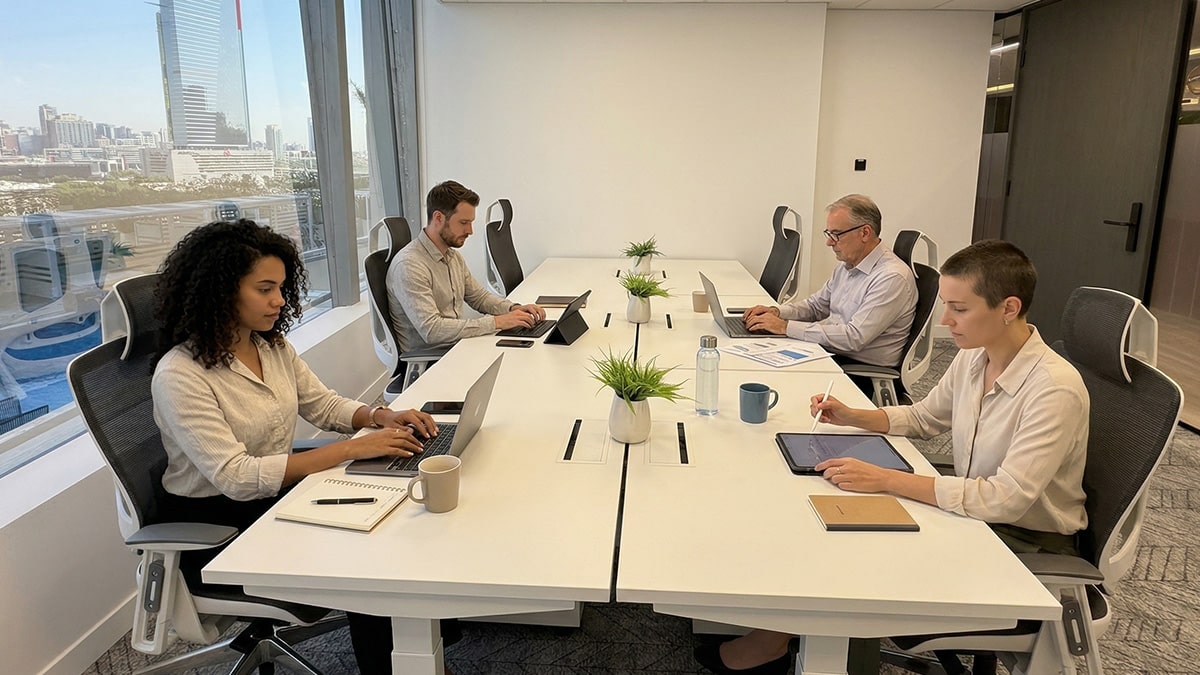
Entrepreneurs keep their businesses running during disruptions by building flexibility into their setup rather than relying on a single fixed way of working.
In reality, things rarely go exactly to plan. Timelines shift, access changes, priorities move. Sometimes gradually, sometimes all at once.
In a constantly evolving business environment, more founders are realising that continuity isn’t about control. It’s about having enough flexibility to keep moving when conditions change.
That might mean switching where you work, how your team connects, or even how you meet clients. The businesses that handle disruption best aren’t necessarily the biggest. They’re usually the ones set up to adapt quickly without too much friction.
Why business continuity is critical for entrepreneurs
Business continuity matters because it protects income, maintains trust, and keeps things moving when interruptions happen.
For most entrepreneurs, especially those working closely with clients, even a short disruption can ripple outward. A delayed response here, a missed meeting there, and suddenly things start to feel a bit off.
Clients don’t always need perfection. What they do notice is consistency.
If your business can keep operating even as things around it shift, it builds a quiet kind of confidence. The kind that keeps people coming back.
What counts as a disruption in today’s business environment
Disruptions today don’t always look dramatic. More often, they show up as small shifts that slowly change how work gets done.
Remote work is a good example. It allowed flexibility, but also introduced new challenges around communication and coordination.
Travel limitations can still affect how businesses meet, expand, or manage relationships across regions.
Then there’s economic pressure. Not always visible day to day, but enough to influence decisions around hiring, office space, and growth.
It’s rarely one big event. It’s usually a mix of smaller changes that force businesses to rethink how they operate.
How flexible offices support business continuity
Flexible offices support business continuity by providing immediate, ready-to-use workspace without long-term commitments.
One of the biggest advantages is access. If your usual setup isn’t available or no longer practical, you can step into a fully operational workspace almost immediately.
There’s also no long-term tie-in. You’re not locked into a fixed lease or a space that may not suit your needs a few months down the line.
Then there’s scalability. Whether you need a single desk, a meeting room for a day, or space for a growing team, flexible offices adjust with you.
It’s a practical way to stay operational without overcommitting.
The importance of having a reliable workspace
A reliable workspace provides consistency for meetings, coordination, and day-to-day operations, especially when things feel uncertain elsewhere.
There’s something simple but important about having a place you can rely on.
Client meetings need to feel professional. Team discussions need structure. Even solo work benefits from a consistent environment where focus comes a bit easier.
Working entirely on the move or from temporary setups can work for a while. Over time, though, it becomes harder to maintain the same level of consistency.
A dependable workspace anchors everything else.
How entrepreneurs combine remote work with physical offices
Entrepreneurs combine remote work and physical offices by adopting hybrid models that allow them to move between locations depending on their needs.
Remote work offers flexibility. It allows teams to operate across locations and gives individuals more control over how they structure their day.
At the same time, there are times when being in a physical space simply works better. Strategy sessions, client presentations, or collaborative work often benefit from being in the same room.
This is where hybrid setups come into play.
On-demand meeting rooms, flexible office access, and shared spaces allow businesses to switch between remote and in-person work without friction.
It’s not about choosing one or the other. It’s about knowing when to use each.
Why serviced offices reduce operational risk
Serviced offices reduce operational risk by offering fully managed spaces with infrastructure already in place, removing the need for setup or ongoing management.
Everything is handled. Internet, utilities, reception services, and meeting facilities. It’s all there from the start.
That means less time spent setting things up and fewer variables to manage day-to-day.
There’s also less exposure. You’re not investing heavily in fit-outs or long-term leases, which makes it easier to adjust if circumstances change.
For many entrepreneurs, that reduction in complexity is what makes the difference.
Practical steps entrepreneurs can take to stay operational
Staying operational during disruptions comes down to planning ahead and building flexibility into everyday processes.
Having a backup workspace is a good starting point. Even if it’s not used regularly, knowing it’s available removes a layer of uncertainty.
Cloud-based tools also play a role. Files, communication, and systems that can be accessed from anywhere make transitions smoother.
Flexible contracts help as well. Whether it’s office space or service providers, avoiding rigid commitments allows you to adjust when needed.
None of these steps are complicated on their own. Together, they create a setup that can absorb change without breaking.
FAQs
What is a serviced office?
A serviced office is a fully equipped workspace that includes furniture, internet, and support services, ready for immediate use without long-term commitments.
Can I run a business fully remotely in Dubai?
Yes, many businesses operate remotely, but having access to a professional workspace can still be valuable for meetings and team coordination.
Are flexible offices better than traditional leases?
It depends on the business. Flexible offices offer adaptability and lower commitment, while traditional leases suit businesses with stable, long-term space needs.
About OBC
One Business Centre (OBC) is a Dubai-based provider of professional business addresses and flexible workspace solutions, operating across three prime locations: Jumeirah Lakes Towers, Downtown Dubai, and Dubai Media City.
OBC offers co-working spaces, virtual office and serviced office packages designed to give businesses a credible, established presence — without the cost or commitment of traditional office leases. Each solution is backed by reliable support services and built to scale as business needs evolve.
For founders and companies looking to establish themselves in Dubai, OBC provides the infrastructure to do it professionally.